-

The Many-Tongued Mimic
Every winter we have at least one unusual bird visitor. The winter before last it was the northern shrike. Last winter, during the pandemic, most birders were excited about the superflight south of boreal birds and welcomed huge numbers of pine siskins, red-breasted nuthatches and common redpolls, as well as evening grosbeaks and even hoary…
-

Fishy Crows
Fish crows have not been studied as much as American crows but like their congeners they are curious, intelligent and social birds
-
Little Brown Bats
Before white-nose syndrome, we could sit out on our unscreened veranda even after dark and rarely see or hear a mosquito. A few male little brown bats roosted in our barn and in openings under our roof and the guesthouse portico roof.
-
Amazing Hooded Warblers
It’s a hot, humid day in mid-July, and a hooded warbler sings his clear, whistled “ta-wit, ta-wit, ta-wit, tee-yo” song. Because hooded warblers have one of the loudest and clearest of warbler songs, it can be heard a long distance, which may be why I can hear it despite a slight hearing loss as I…
-
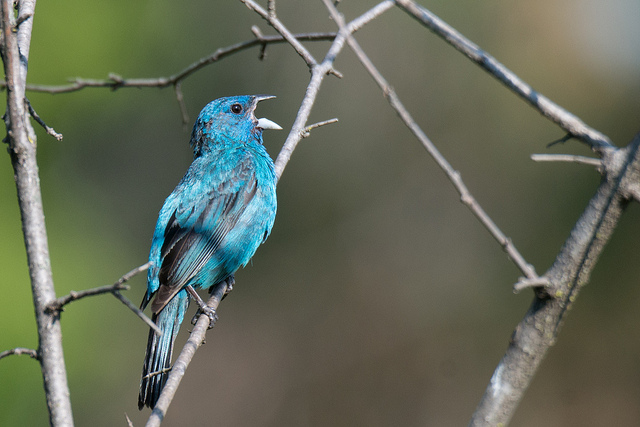
Blue Canaries
On an early May morning, I step outside and hear a warble of clear, bright, musical notes. The indigo buntings have returned. Also known as “blue canaries” because of their color and song, I’ve never been able to describe indigo bunting song to others except to say that I know it when I hear it.
-
Winter Porkies
While I may puzzle over some tracks, there is no mistaking those of porcupines. They plow through the snow on their naked, flat, pigeon-toed feet like miniature bulldozers, and when the tracks freeze, deer, opossums and foxes use them as winter highways.
-
Midwinter Cranes
I never thought I would see sandhill cranes less than 20 miles from my home in central Pennsylvania. Yet there I was last January, sitting in our car with my husband Bruce, watching five sandhill cranes through our scope as they foraged in a small wetland near State College. When the word went out on…
-
White-footed Mice
“I think mice are rather nice.” So began the children’s poem by Rose Amy Fyleman that I read to my three sons when they were young. Fyleman was an English writer who lived in earlier times (1877-1957) and her mice were not the primary hosts for the larvae and nymphs of black-legged (Lyme disease) ticks…
-
Bridge Swallows
Cliff swallows are amazingly adaptable birds. Unlike most species, they seem to thrive because of human-designed structures.
-
Cavity-Nesting Birds
I’ve never thought of myself as a female Dr. Doolittle, but last June a bird “talked” to me and I understood her.
-
Living with Bears
Over the years I have had numerous close encounters with black bears, and not once have I felt threatened. That is as it should be according to black bear researcher Benjamin Kilham. He has been studying black bears in the field and raising orphaned cubs at the behest of the New Hampshire Fish and Game…
-
Subscribe
Subscribed
Already have a WordPress.com account? Log in now.
 Marcia Bonta